
In our department, you’ll find opportunities to learn through research projects and field investigations in addition to the classroom and lab. You’ll leave with the skills and habits you need to become a professional geologist or environmental scientist.
Geology
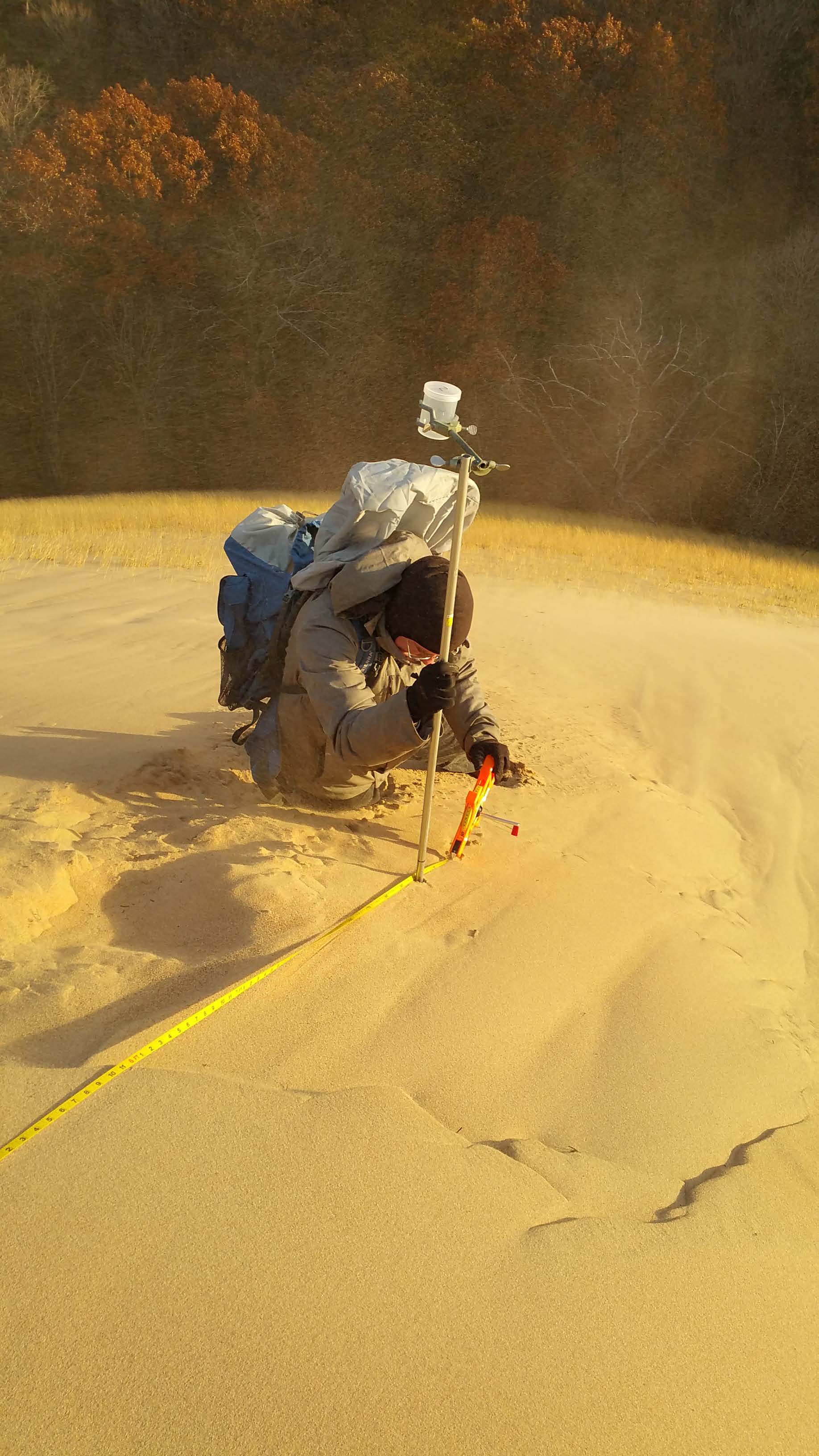 Geologists want to understand our planet, including its past and what is happening
now, inside it and on its surface, so that we can understand the sources and limits
of resources, avoid natural hazards and live safe and healthy lives. Geologists apply
concepts from across the sciences to explain the Earth and its history, so geology
is a great choice for people with broad interests in science.
Geologists want to understand our planet, including its past and what is happening
now, inside it and on its surface, so that we can understand the sources and limits
of resources, avoid natural hazards and live safe and healthy lives. Geologists apply
concepts from across the sciences to explain the Earth and its history, so geology
is a great choice for people with broad interests in science.
If you are curious about the natural world, interested in life in the past, concerned about providing water to people in developing countries or wondering why Lake Michigan has so many dunes, geology might be for you.
Hope’s Geology Program
Our program offers a solid grounding in the principles of geology, as well as insight into geology's connections with the other sciences. Our classes cover:
- Earth history and the history of life
- Earth materials including minerals, sediments and rocks
- Groundwater
- Geochemical reactions in large Earth systems
- Geology of the Earth's surface
- Deformation of rocks inside the Earth
We provide a broad survey of specialties in geology and a firm foundation for entering the workforce or specializing in graduate school.
Environmental Science
Environmental scientists examine how human actions — whether clearing forests for
cropland or littering a roadside — affect the planet and its living things, and in
turn how changes to the planet affect humans. Environmental science addresses some
of the greatest questions facing humanity today, such as, “How do we best provide
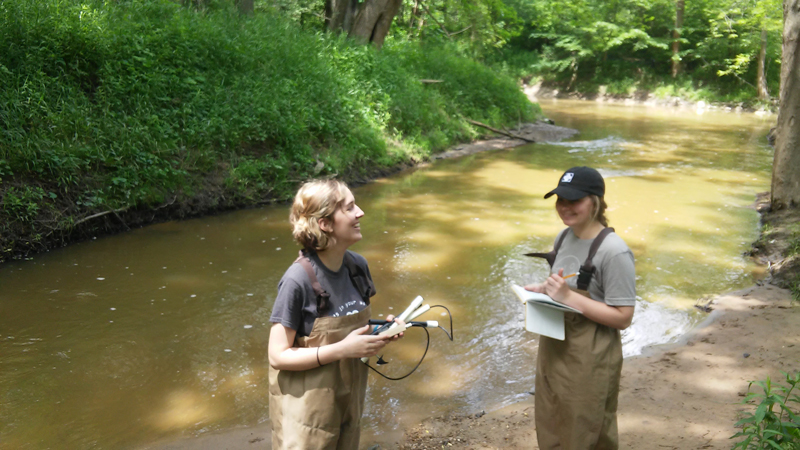 energy, food and water to current and future generations?” Environmental problems
are broad, complex and mutifaceted.
energy, food and water to current and future generations?” Environmental problems
are broad, complex and mutifaceted.
If you enjoy working with others to rigorously understand complicated issues that matter to people in your hometown and around the globe, environmental science might be for you.
Hope’s Environmental Science Program
Our program in Environmental Science is built to encourage communcation and collaboration across disciplines. Environmental problems are solved when specialists from different fields work together to bring their insights to bear. Our courses encourage this kind of interdisciplinary work among students who bring a variety of backgrounds and interests.
We emphasize:
- Hands-on work with data and samples
- An interdisciplinary understanding of economic, political and scientific factors that underlie environmental decision-making
- Self-directed team research projects that provide a capstone experience for our graduates
Interested in environmental science?Our environmental science program accommodates a wide range of interests where science and the environment intersect.
interested in geology?
We offer a variety of geoscience degree options, including geochemistry and geophysics.
Walk-In Office Hours
Monday: None
Tuesday: 7:30 a.m.–3:30 p.m.
Wednesday: None
Thursday: None
Friday: 7:30 a.m.–3:30 p.m.
A. Paul Schaap Science Center35 East 12th StreetRoom 2107Holland, MI 49423
workP. 616.395.7540
bodenbender@hope.edu